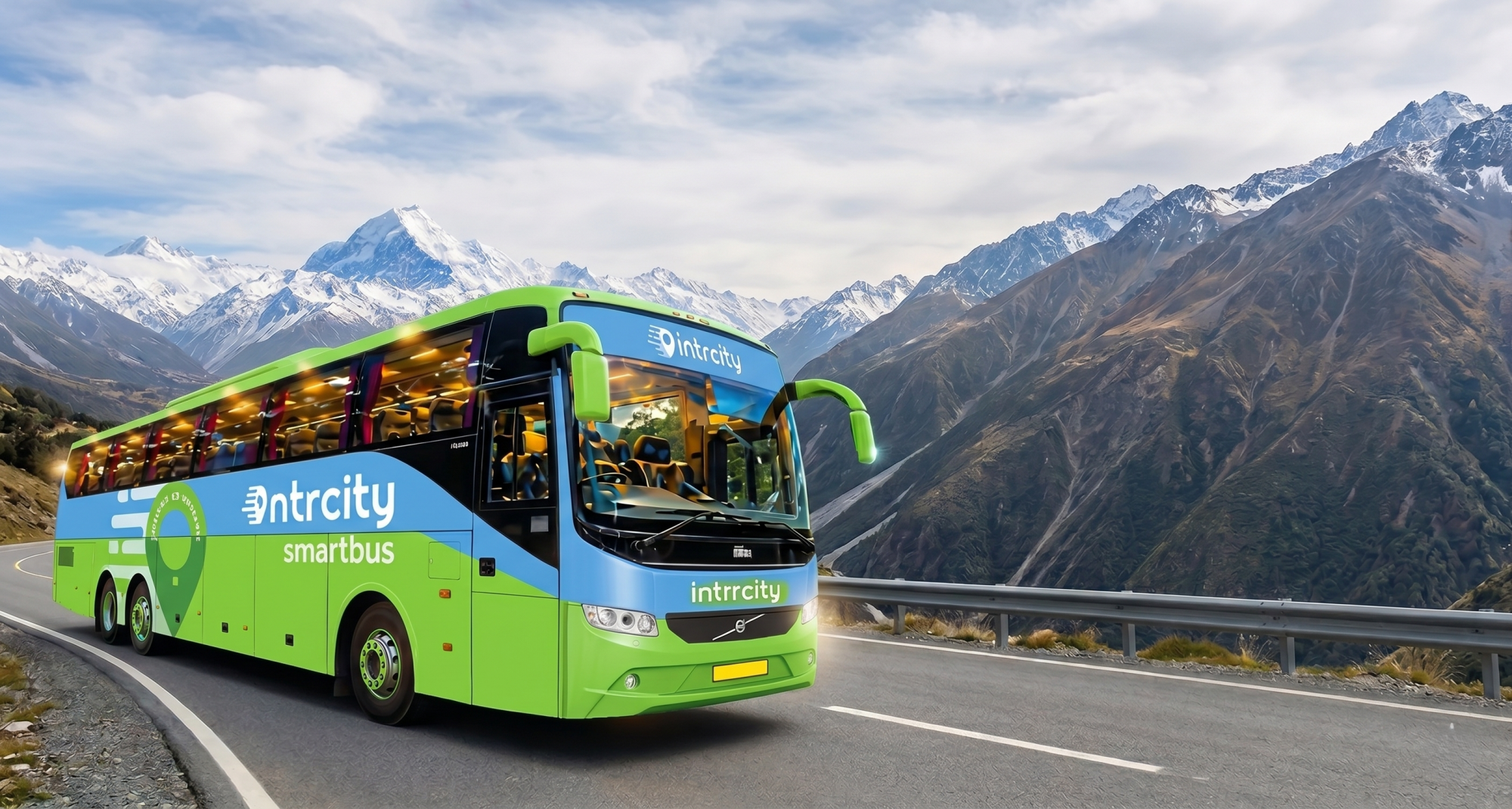

From Delhi to Manali is the most spectacular route in all of India. Leaving behind the noise and scorching heat of the plains, crossing rivers in Punjab, climbing through the Shivalik Hills, passing through the Kullu valley, and finally reaching Manali, which lies amidst magnificent snowy peaks, the scenery will change every two hours. Moreover, it gets increasingly cooler until, when you eventually arrive in Manali, the air will smell differently.
The trip is rather long – 500 to 550 kilometers and 13 to 16 hours in total, depending on your choice of route. Such distance determines the key factor that will define your entire trip – the quality of the bus you choose. An ordinary coach can turn this trip into an ordeal. Conversely, a Volvo AC sleeper coach can offer quite a different experience – starting the trip in the evening, sleeping during the trip through the plains, and waking up in the middle of the hills.
This guide contains information about any aspect of your bus trip from Delhi to Manali.
The Delhi to Manali Route: What You Need to Know
The standard route from Delhi to Manali runs via NH44 to Chandigarh, then NH21 through Bilaspur, Sundernagar, Mandi, and Kullu before reaching Manali. Some buses take the Pathankot route via Kangra — slightly longer but used by certain operators.
Distance: 500 to 550 km depending on the route taken Journey time: 13 to 16 hours Typical departure window: 5 PM to 9 PM from Delhi Typical arrival: 7 AM to 11 AM in Manali
Most buses depart from Delhi in the evening and are timed to arrive in Manali in the morning — giving you a full day to check in, acclimatise, and explore. This overnight timing is also why the quality of your berth matters so much. You are spending the night on this bus, not just a few waking hours.
The road through Kullu Valley in the final stretch — particularly from Mandi onward — is mountain terrain. Winding roads, river crossings, and elevation gain. This section is beautiful when you are awake for it but also the part of the journey where a smooth-riding coach with good suspension makes the biggest difference.
Why Volvo Buses Are the Right Choice for This Route
On a 13 to 16 hour mountain highway journey, the difference between a Volvo multi-axle coach and a standard AC bus is not marginal. It is significant and felt across every hour of the ride.
Air suspension on mountain roads. Standard buses use steel spring suspension that transmits road vibrations directly into the passenger cabin. On the plains this is manageable. On the winding mountain section between Mandi and Manali, with its uneven surface and sharp bends, air suspension is the difference between a rough, fatiguing ride and a smooth one. Volvo multi-axle coaches handle this terrain noticeably better.
Wider seats and deeper recline. Volvo seater coaches offer seats approximately 430 to 450 mm wide — wider than standard AC buses. The recline is also deeper. On a 14-hour overnight journey, both matter for genuine rest.
Advanced braking on descents. The mountain section of this route involves significant elevation changes. Volvo buses are equipped with ABS and engine braking systems that perform better on descents than standard coach braking setups — a genuine safety advantage, not just a comfort one.
Sleeper berths for overnight travel. The most popular coaches on the Delhi to Manali route are Volvo AC sleepers. Private berths with curtains, blankets, and charging ports mean you can genuinely sleep through the plains section and wake up in the mountains. This is what most regular travellers on this corridor choose, and for good reason.
Types of Buses on the Delhi to Manali Route
Volvo AC Sleeper (2+1 or 2+2 configuration) The best option for the overnight journey. Private berths, AC throughout, blankets and pillows included, individual charging points and reading lights. The 2+1 configuration — two berths on one side, one on the other — gives solo travellers a full private berth without a co-passenger. This is the most popular choice among repeat travellers on this route.
Volvo AC Semi-Sleeper Deeply reclining seats rather than flat berths. A reasonable choice if sleeper berths are sold out or if you prefer sitting upright. Adequate for the plains section but less comfortable for the mountain stretch when the road gets winding.
Volvo AC Seater Standard reclining AC seats. Comfortable enough for shorter journeys but less suitable for a 14-hour overnight route. Best for daytime travel if departures are available.
HRTC Volvo (Himachal Road Transport Corporation) The state transport operator runs Volvo AC seater and semi-sleeper coaches on this route from ISBT Kashmiri Gate. Reliable, reasonably priced, and well-operated — a solid option, particularly if you are travelling on a tighter budget. Fares are fixed and do not vary by booking window.
Ordinary non-AC buses Available through HRTC and private operators. Not recommended for a 14-hour overnight mountain journey, particularly between May and October when the route gets busy and road conditions in the higher sections can be demanding.
How to Book Your Delhi to Manali Bus Online
The Delhi to Manali corridor is one of the busiest leisure travel routes in North India. During peak season — May to July and September to October — premium sleeper berths fill up 10 to 14 days in advance. Last-minute booking almost always means fewer seat choices and higher fares.
Here is how to complete your bus ticket booking on IntrCity SmartBus:
- Visit IntrCity.com or open the IntrCity SmartBus app
- Enter Delhi as origin and Manali as destination
- Select your travel date and search available coaches
- Compare bus types, departure times, available seats, and fares
- Select your preferred berth or seat on the interactive seat map
- Pay via UPI, card, or net banking — no hidden charges at checkout
- Receive your confirmed e-ticket instantly
Fares on the Delhi to Manali bus typically range from ₹1,000 to ₹2,500 depending on the coach type and booking window. Volvo AC sleeper berths in peak season command the higher end of this range. Booking 10 days or more before departure consistently delivers better seats at lower prices.
After booking, track your bus in real time through the IntrCity app. Live GPS updates every 30 to 60 seconds — useful when coordinating late-evening pickups or checking progress on the mountain section.
Choosing the Right Seat on the Delhi to Manali Bus
Seat selection on this route deserves careful thought. The journey has two very different sections — flat highway through Punjab and Himachal foothills for the first 8 to 9 hours, followed by mountain terrain from Mandi onward.
Lower berth vs upper berth: Lower berths are easier to access and feel less confined. Upper berths are slightly cooler, more private, and less disturbed by co-passengers moving around. On this route, upper berths also give you a better view of the mountains on the morning section if you are awake for it.
Avoid the rear berths. The last row of berths on most coaches sits directly over the rear axle. On mountain roads, this translates into the roughest ride on the bus. If the seat map has options, choose berths in the middle section of the coach.
Window side on the return. If you are also booking the return Manali to Delhi leg, choose the right-side window seat or berth. On the way back, the right side of the bus faces the Beas River for much of the Kullu Valley stretch arguably the most scenic section of the entire route.
Practical Tips for the Delhi to Manali Journey
Reach the boarding point early. Delhi evening traffic is unpredictable. Most buses depart from ISBT Kashmiri Gate, Majnu Ka Tila, or AIIMS flyover. Budget extra travel time and aim to be at the boarding point at least 20 minutes before departure.
Carry warm clothing in your hand luggage. Even in summer, Manali mornings can be cold — often between 8°C and 14°C in June. Your main luggage goes in the undercarriage hold. Keep a fleece or light jacket accessible in your cabin bag.
Eat before boarding. The bus typically makes one or two brief dhaba stops on the highway — usually somewhere near Chandigarh or Bilaspur. These stops are 20 to 30 minutes and not always at convenient meal times. Eat a proper meal before departure.
Acclimatise on arrival. Manali sits at approximately 2,050 metres above sea level. If you are heading further to Rohtang Pass, Spiti, or Leh, spend at least one night in Manali before going higher. Altitude sickness is real and avoidable with proper acclimatisation.
Book accommodation before you travel. During peak season (May–July), Manali accommodation fills up fast — particularly budget guesthouses and popular hostels. Sort your first night at minimum before boarding the bus.
Best Time to Take the Delhi to Manali Bus
May to July: Peak season. Rohtang Pass opens, Solang Valley is fully accessible, and the weather is ideal for outdoor activities. The busiest period on the route — book well in advance.
August to September: Monsoon season. The Manali highway is prone to landslides, particularly between Mandi and Kullu. Check road conditions before travel. September is safer than August and offers lower crowds with good weather.
October: Short but excellent window. Post-monsoon clarity, snow dusting on higher peaks, fewer tourists than summer. One of the best months to travel if you can manage it.
November to April: Rohtang Pass closes. The road is accessible only up to Manali town. Winter visits are quieter and beautiful but cold. Some sections of the highway can be affected by snowfall — check HRTC advisories before booking.
Boarding Points in Delhi
Most Delhi to Manali buses depart from the following locations:
- ISBT Kashmiri Gate — the main interstate bus terminus; HRTC and most private operators depart from here
- Majnu Ka Tila — popular pickup point, especially for travellers from north and central Delhi
- AIIMS / Dhaula Kuan — used by several private operators for south Delhi and NCR passengers
- Akshardham / Anand Vihar — for east Delhi and NCR travellers
Your confirmed boarding point will be listed on your e-ticket after completing your online bus booking. Do not assume — check the ticket before you leave home.
Final Thoughts
The Delhi to Manali bus journey is long. But on the right coach — a Volvo AC sleeper with a well-chosen berth and a quality operator — it is also one of the most rewarding long-distance routes in India. You board in a city. You step off in the mountains. The journey itself is part of the experience.
Book early, choose your berth deliberately, carry warm layers, and leave yourself a day to settle in Manali before heading higher.
Frequently Asked Questions (FAQs)
Q1. How long does the Delhi to Manali bus journey take?
Ans. The Delhi to Manali bus journey takes approximately 13 to 16 hours depending on the route, traffic conditions, and weather. Most buses depart from Delhi in the evening and arrive in Manali in the morning.
Q2. What is the fare for the Delhi to Manali Volvo bus?
Ans. Fares typically range from ₹1,000 to ₹2,500 depending on the coach type and booking window. Volvo AC sleeper berths are at the higher end of this range. Booking 10 or more days in advance consistently delivers better prices.
Q3. Which is the best bus type for the Delhi to Manali overnight journey?
Ans. Volvo AC Sleeper in a 2+1 configuration is the most comfortable option for this route. Private berths with blankets, curtains, and charging ports allow genuine rest on a 13 to 16 hour overnight journey.
Q4. How do I complete my online bus booking for Delhi to Manali?
Ans. Visit Intrcity.com or open the IntrCity SmartBus app. Enter Delhi as your origin and Manali as your destination, select your travel date, choose your berth on the seat map, and pay. Your e-ticket is confirmed instantly.
Q5. What are the main boarding points in Delhi for the Manali bus?
Ans. The primary boarding points are ISBT Kashmiri Gate, Majnu Ka Tila, AIIMS/Dhaula Kuan, and Akshardham/Anand Vihar. Your confirmed boarding location is listed on your e-ticket after bus booking.
Q6. Is the Delhi to Manali bus route safe during monsoon?
Ans. The route can be affected by landslides between August and mid-September, particularly on the Mandi to Kullu stretch. Check HRTC road advisories and weather updates before travel. September is generally safer than August.
Q7. Can I track my Delhi to Manali bus in real time after booking?
Ans. Yes. IntrCity SmartBus provides live GPS tracking through its app once your bus booking is confirmed. Location updates every 30 to 60 seconds — useful for monitoring progress on the mountain section.
Q8. How early should I book the Delhi to Manali bus during peak season?
Ans. Book at least 10 to 14 days in advance during May to July and September to October. Volvo sleeper berths on evening departures sell out fastest. Last-minute booking during peak season means fewer berth choices and higher fares.