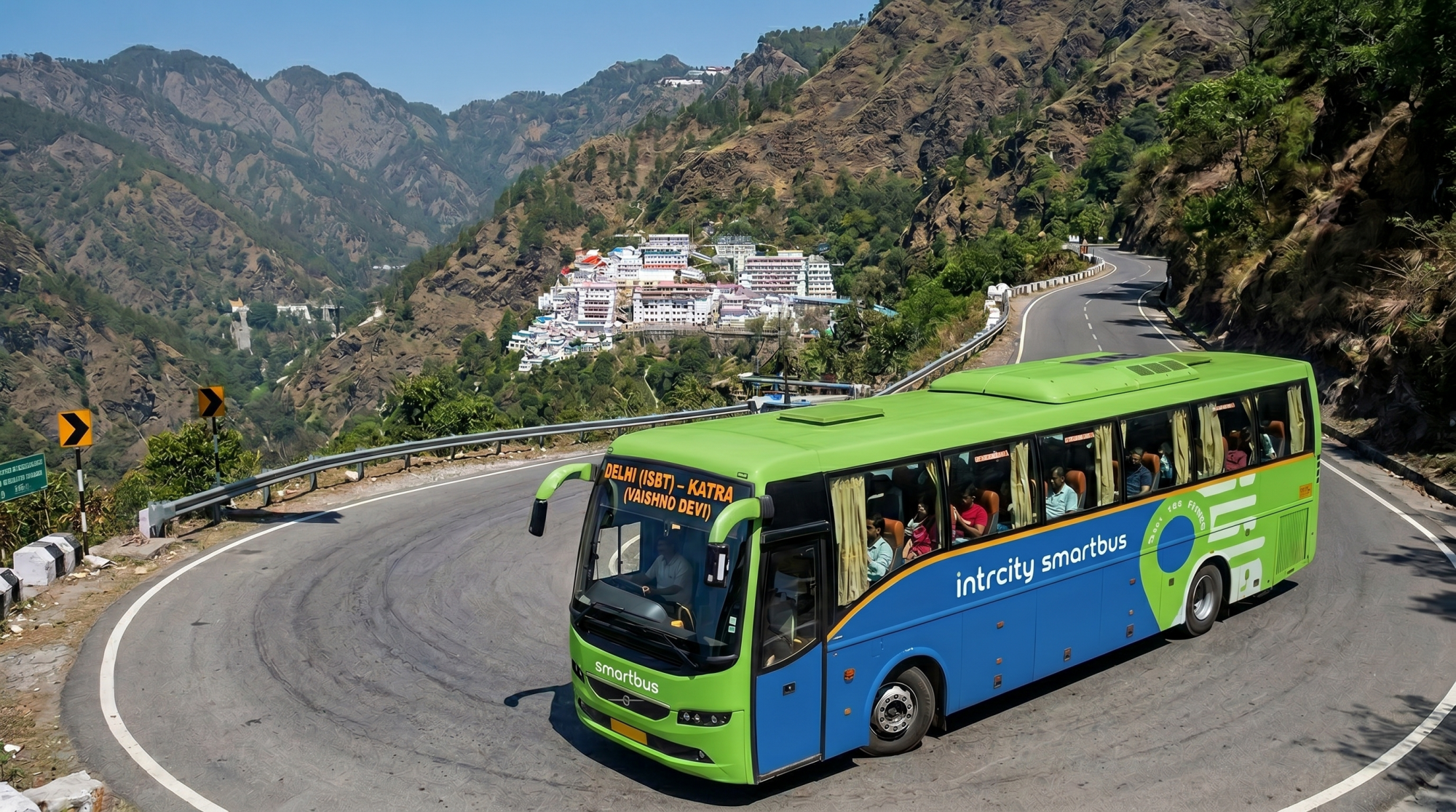

Year after year, millions of devotees undertake the pilgrimage to Vaishno Devi. This highly popular pilgrimage shrine is located in Trikuta Mountains, Jammu and Kashmir, at an elevation of 5,200 feet above sea level. People from all corners of the country take the long journey to visit the holy shrine. For many of those pilgrims, their journey starts in Delhi.
The easiest and the most cost-effective means of transportation for this purpose is the Delhi to Katra bus. Katra is known as the gateway for the pilgrimage to Vaishno Devi, as all pilgrimages to the shrine start from here. As soon as you get down from your bus at Katra, you will be only about 14 km away from the Bhawan, and there are all the necessary arrangements for trekking, pony ride, and even helicopter service from here.
The present guide will provide you with all necessary information on the journey from Delhi to Vaishno Devi, including the route, the course of the journey, what is waiting for you in Katra, pilgrimage procedures, and how to make your bus reservation online.
Delhi to Katra: The Route and Distance
The road distance from Delhi to Katra is approximately 650 to 700 km, primarily via NH44 — one of India’s longest national highways, running through Ambala, Ludhiana, Jalandhar, and Jammu before reaching Katra.
The journey takes between 11 and 14 hours by bus depending on traffic, weather conditions, and the number of stops. Winter travel, particularly during December and January, can add time due to fog on the Punjab plains and occasional snow near Katra.
Most buses on this route depart from Delhi in the evening — between 5 PM and 9 PM — and are timed to arrive in Katra in the early morning, leaving pilgrims the entire day to register for the yatra and begin the trek.
Why Take the Bus From Delhi to Katra
The Delhi to Katra route has train connectivity via Jammu Tawi, and flights operate into Jammu Airport. But for most pilgrims, the bus remains the preferred choice — and the reasons are practical.
Direct service. Buses run directly from Delhi to Katra. By train, you arrive in Jammu and need a separate taxi or bus for the 48 km onward journey to Katra — adding time, cost, and coordination. The bus drops you in Katra, exactly where you need to be.
Overnight travel. Evening departures mean you cover the distance while you sleep and arrive ready to begin the yatra. You do not lose a day of travel in either direction.
Affordable fares. The Delhi to Katra bus is significantly cheaper than flying into Jammu and then taking a cab. For family groups and pilgrims on a budget, the cost difference is substantial.
Flexibility. Multiple departure times throughout the evening mean you can plan around your own schedule — whether you are finishing work in Delhi or travelling from a nearby city to Delhi first.
Types of Buses Available on the Delhi to Katra Route
Not all buses on this route are equal, and the difference matters on an 11 to 14 hour journey.
Volvo AC Sleeper: The most comfortable option for the overnight journey. Private berths with curtains, blankets, and charging ports. Fully air-conditioned. This is the recommended choice for families, elderly pilgrims, and anyone prioritising rest before the trek.
Volvo AC Semi-Sleeper: Deeply reclining seats in an AC coach. A good middle ground if sleeper berths are fully booked or if you prefer sitting upright.
AC Seater: Standard reclining seats in an AC coach. Adequate for most travellers but less comfortable than semi-sleeper or sleeper for an overnight journey of this length.
Non-AC Ordinary: Available through state transport. Significantly cheaper but not recommended for an 11 to 14 hour overnight journey — particularly in winter when temperatures on this route drop sharply.
On a journey this long, the quality of your seat or berth directly affects how you feel when you arrive. Arriving in Katra rested matters — you have a 14 km trek ahead of you.
How to Book Your Delhi to Katra Bus Online
Completing your online bus booking before travel is strongly recommended on this route. If you are combining Vaishno Devi with other pilgrimage destinations, also read our Andhra Pradesh pilgrimage travel guide for planning ideas on multi-shrine trips by bus. The Delhi to Katra corridor is busy year-round and extremely crowded during Navratri periods (March–April and September–October) when pilgrim numbers peak. Premium sleeper seats on quality operators fill up 10 to 14 days in advance during these windows.
Here is how to book on IntrCity SmartBus:
- Go to IntrCity.com or open the IntrCity SmartBus app
- Enter Delhi as your origin and Katra as your destination
- Select your travel date and search available coaches
- Compare departure times, bus types, and seat availability
- Select your preferred seat on the interactive seat map
- Pay securely via UPI, debit or credit card, or net banking
- Receive your confirmed e-ticket instantly on your phone
Your bus booking is confirmed immediately no follow-up calls, no counter visit required. The e-ticket is your boarding pass.
Fares on the Delhi to Katra bus typically range from ₹900 to ₹2,000 depending on the bus type and how far in advance you book. Sleeper AC berths cost more than seaters but are genuinely worth the premium on a journey of this length.
What to Expect in Katra
Katra is a well-organised pilgrim town built almost entirely around the Vaishno Devi yatra. Most travellers arrive, complete the trek, and return within 24 to 48 hours — though the town has decent accommodation for those who want to stay longer or prefer a rest day before the trek.
Yatra registration: Before you can begin the trek, you need a Yatra Slip — a registration document issued by the Shri Mata Vaishno Devi Shrine Board. This can be done online at the shrine board’s official website (maavaishnodevi.org) before you leave Delhi, or at the registration counters in Katra on arrival. Online registration is strongly recommended during peak periods as counter queues can be long.
Trek distance: The main trekking route from Katra to the Bhawan is approximately 14 km one way. The full trek — Katra to Bhawan and back — is around 28 km. Most pilgrims complete it in 6 to 8 hours one way, depending on pace and crowd size.
Alternative options: Ponies and palkis (palanquins) are available from Katra for those who prefer not to walk. A helicopter service operates between Katra (Sanjichhat helipad) and Sanjichhat, cutting the upward trek to just 2.5 km from the landing point. The helicopter is popular and must be booked in advance, especially during peak pilgrimage seasons.
Accommodation in Katra: Budget dharamshalas to mid-range hotels are available in Katra. During Navratri, rooms fill up weeks in advance. Book accommodation before you travel if your visit falls in September, October, March, or April.
Practical Tips for the Delhi to Katra Bus Journey
Carry a light jacket even in summer. The bus is AC for the full journey and highway temperatures drop significantly after midnight, especially on the stretch approaching Jammu. A light shawl or jacket is useful even in June and July.
Eat before boarding. Most overnight buses on this route make one or two brief stops at highway dhabas. These stops are short — 20 to 30 minutes — and not always predictable. Eat a proper meal before departure and carry light snacks and water for the journey.
Carry cash. Katra has ATMs but they can run out of cash during peak pilgrimage periods. Withdraw before you leave Delhi.
Download your e-ticket offline. Mobile data can be unreliable on some sections of the highway and near Katra. Screenshot your ticket or download it before leaving home.
Track your bus in real time. IntrCity SmartBus provides live GPS tracking after your bus booking is confirmed. You can monitor your bus’s location through the app — useful for coordinating with family or simply knowing how far you are from Katra at 5 AM.
Best Time to Visit Vaishno Devi
Vaishno Devi is open year-round, but some periods are better than others.
March to June: Pleasant temperatures, good trekking conditions, manageable crowds outside the Navratri window. One of the best times to visit.
Navratri (March–April and September–October): The most auspicious pilgrimage period. Massive crowds — queues at the shrine can stretch many hours. Book your Delhi to Katra bus and accommodation well in advance.
July to September: Monsoon season brings cooler temperatures and a lush landscape but also slippery trails. Trek carefully and check weather updates before departure.
November to February: Cold, with occasional snowfall near the shrine. The trek is more challenging but also quieter. Wear proper winter layers and carry extra warm clothing.
Boarding Points in Delhi for the Katra Bus
Most buses on the Delhi to Katra route depart from one or more of the following boarding points:
- Kashmiri Gate ISBT — the primary interstate bus terminus for northern routes
- Majnu Ka Tila — a popular pickup point for north Delhi passengers
- Dhaula Kuan — convenient for passengers coming from south and west Delhi
- Akshardham / NH44 pickup points — for east Delhi and NCR travellers
Your exact boarding point will be confirmed on your e-ticket after completing your bus ticket booking. Check it carefully before travel — some operators use different boarding locations from the ones you might assume.
Final Thoughts
The Delhi to Katra bus is the most direct, affordable, and time-efficient way to begin your Vaishno Devi pilgrimage. An evening departure, a comfortable overnight journey, and you are in Katra by morning — registered, rested, and ready for the trek.
The key is planning ahead. Book your bus ticket early, register for your Yatra Slip online, sort your accommodation in Katra, and choose a quality operator that gives you live tracking, transparent pricing, and a well-maintained coach for the journey.
Book your Delhi to Katra bus on IntrCity SmartBus at IntrCity.com and start your yatra on the right note.
Frequently Asked Questions (FAQs)
Q1. How long does the Delhi to Katra bus journey take?
Ans. The Delhi to Katra bus journey takes approximately 11 to 14 hours depending on traffic, weather, and the number of stops. Most buses depart from Delhi in the evening and arrive in Katra early the following morning.
Q2. What is the fare for the Delhi to Katra bus?
Ans. Fares typically range from ₹900 to ₹2,000 depending on the bus type (seater, semi-sleeper, or sleeper AC) and how far in advance you book. Booking 7 to 10 days early usually gets you better rates and seat availability.
Q3. Which is the best bus type for the Delhi to Katra overnight journey?
Ans. Sleeper AC coaches are the recommended choice for this route. The journey is 11 to 14 hours, and arriving in Katra rested matters since you have a 14 km trek ahead. Semi-sleeper AC is a good alternative if sleeper berths are unavailable.
Q4. How do I book a Delhi to Katra bus ticket online?
Ans. Visit IntrCity.com or open the IntrCity SmartBus app. Enter Delhi as your origin and Katra as your destination, select your travel date, choose a seat, and pay. Your e-ticket is confirmed instantly.
Q5. Do I need to register for the Vaishno Devi yatra before arriving in Katra?
Ans. Yes. A Yatra Slip is mandatory before you can begin the trek. You can register online at maavaishnodevi.org before leaving Delhi, which is strongly recommended during Navratri and other peak periods. Registration counters are also available in Katra on arrival.
Q6. What are the main boarding points in Delhi for the Katra bus?
Ans. The primary boarding points include Kashmiri Gate ISBT, Majnu Ka Tila, Dhaula Kuan, and pickup points along NH44. Your exact boarding location will be confirmed on your e-ticket after online bus booking.
Q7. Is the Delhi to Katra bus route safe?
Ans. Yes. The NH44 is a well-maintained national highway and a heavily used intercity corridor. Quality operators like IntrCity SmartBus use modern coaches with live GPS tracking, and all bookings include real-time bus monitoring through the app.
Q8. When is the best time to visit Vaishno Devi?
Ans. March to June offers pleasant weather and manageable crowds. Navratri in March–April and September–October is the most auspicious time but sees the largest pilgrim volumes. Winter (November to February) is quieter but colder, with possible snowfall near the shrine.